The package registry is a competitor's honest changelog
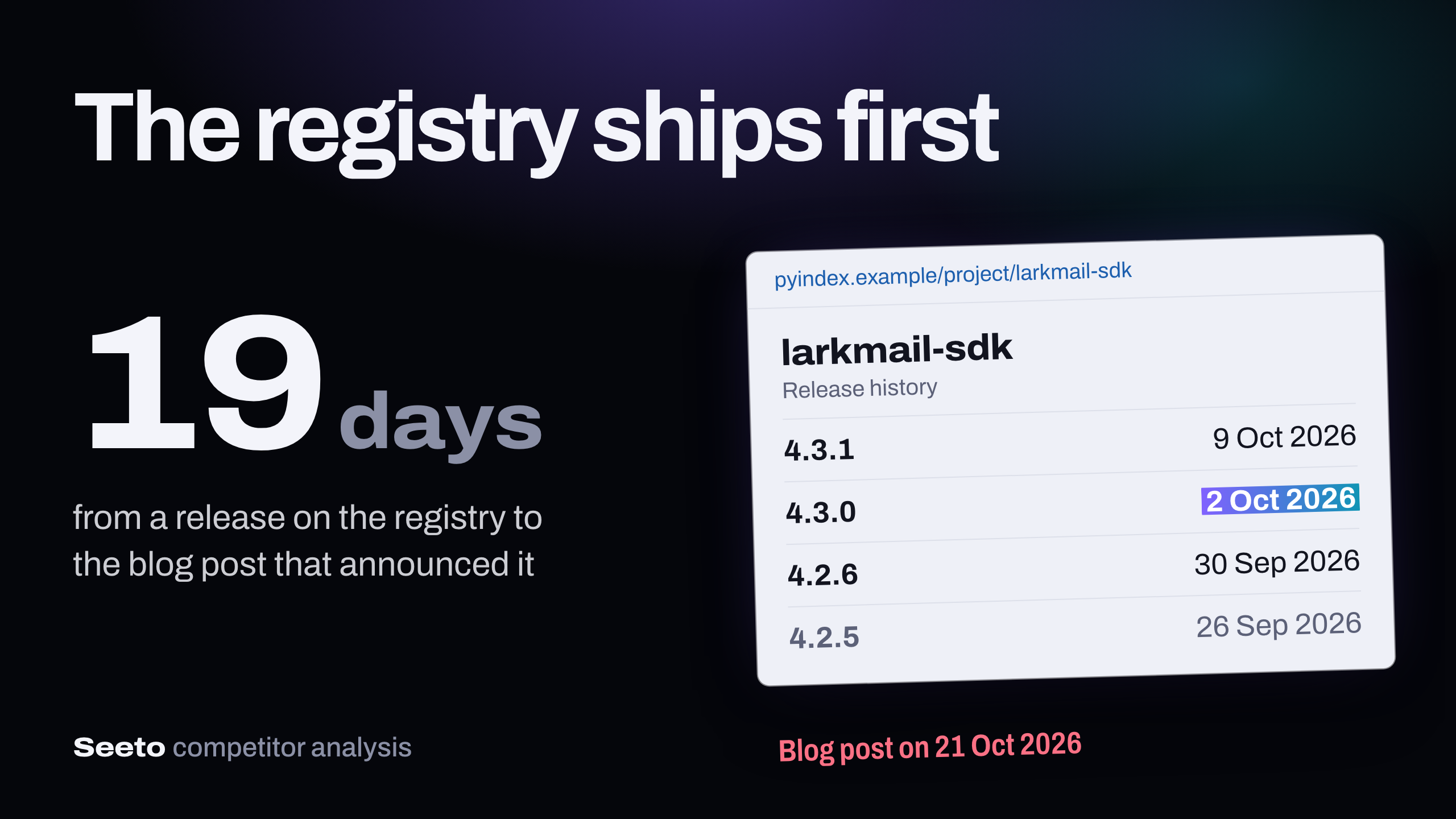
Picture a team that spends a week waiting for a competitor to announce a feature. The feature has been sitting in the competitor's Python SDK for nineteen days.
The method is there, named, typed and documented in a docstring. The release is public on PyPI. The blog post comes almost three weeks later. The team was watching the blog.
A page nobody writes for you
If a competitor sells to developers, they publish client libraries. Those libraries live on public registries: npm for JavaScript, PyPI for Python, RubyGems, Maven Central, NuGet, Go modules.
Every registry page carries a version history. Each version has a number and a publish date. That is all. No adjectives, no hero image, no "we're thrilled".
The marketing team does not own this page. A release pipeline does. That makes it one of the few competitor surfaces that reports what happened instead of what the company wants said. It is the same reason a competitor's GitHub is worth a visit, except the registry also exists when the repository is private.
Three things to read
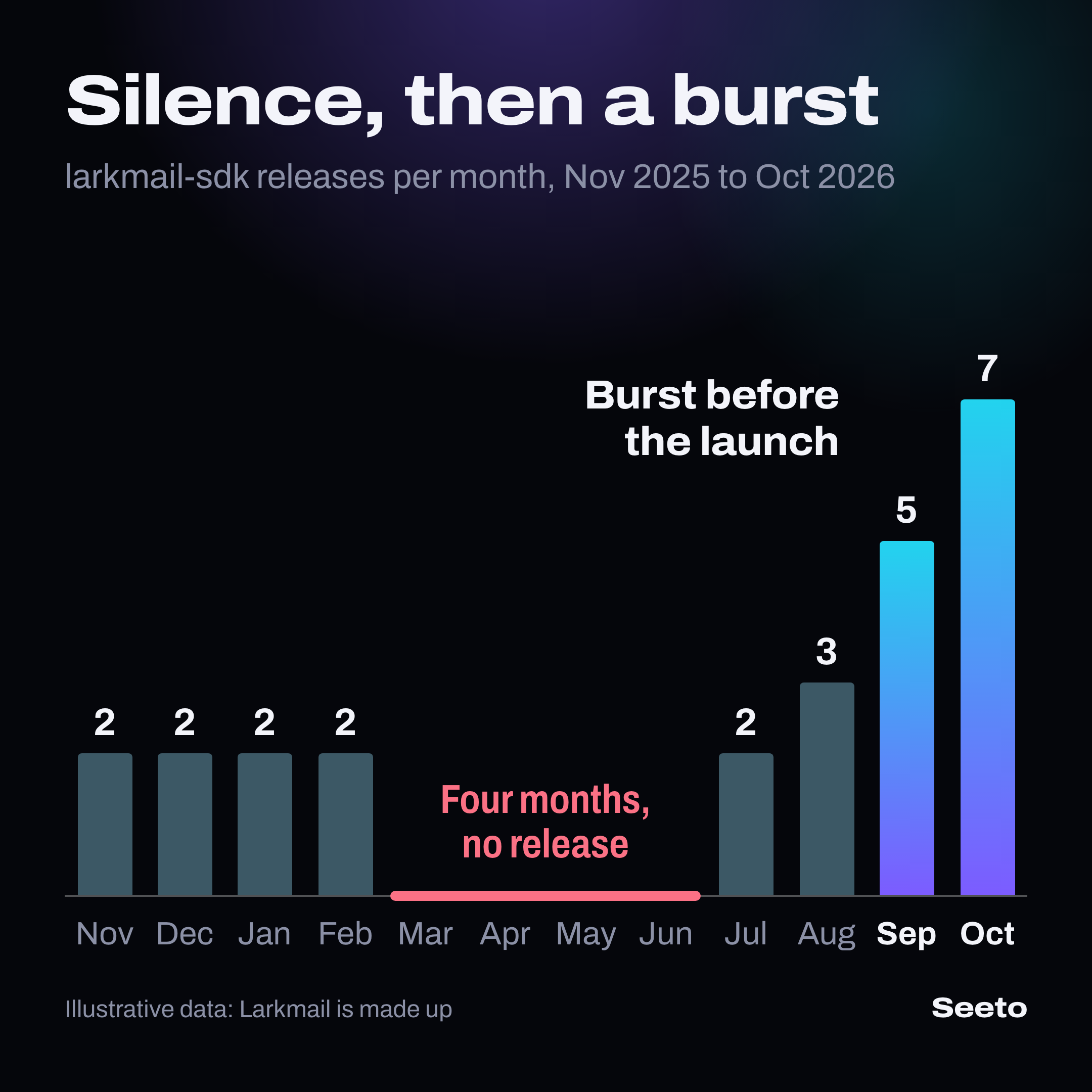
Cadence. Count releases per month for the last year. A library that shipped every two weeks and then went quiet for four months tells you something about where the engineers went. A sudden burst usually comes before a launch.
The major version. A jump from 3.x to 4.0 means a breaking change. Somewhere, their customers are doing migration work. Open the diff between the last 3.x and 4.0 and read which methods were removed. Removed methods are retired product.
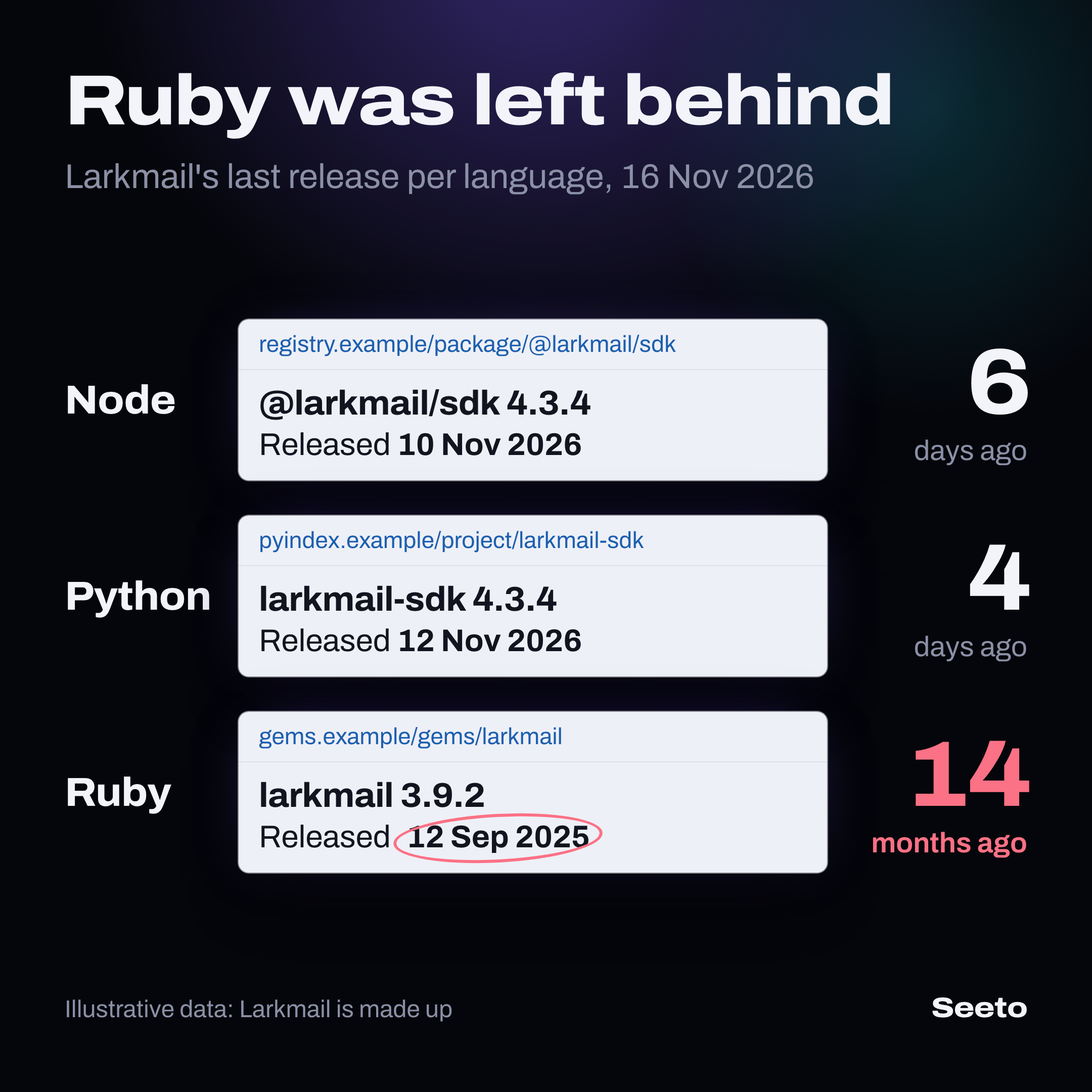
The languages they stopped feeding. Compare the publish dates across registries. If the Node and Python packages shipped last week and the Ruby gem last moved fourteen months ago, the Ruby customer is on their own. That is a line for a sales call, with a date attached.
One caution. Download counts are tempting and mostly noise. Build servers and mirrors inflate them, so the level means little. A trend over a year is the most you should trust.
Where it fits
The registry gives you the date something shipped. It does not give you the story. For the story you still need the changelog and the API docs, and the gap between the three is the finding. Code on the 2nd, docs on the 9th, announcement on the 21st: now you know how long their launches take to assemble.
The date-keeping half does not need a person. Seeto watches a competitor's public pages continuously and records each change as a dated event, so the docs and changelog dates arrive on their own. It does not read the SDK diff for you. Someone still has to open version 4.0 and look at what is gone.
Next time a competitor "announces" something, check the registry first. There is a fair chance they shipped it while you were waiting for the post.