Skip the competitor webinar. Stay for the Q&A.
I registered for a competitor's webinar expecting a product tour. I got one. It was polished, rehearsed, and almost entirely things we already knew from their changelog.
Then the host said, "Let's take some questions." That was where the useful part started.
The slides are marketing. The questions are not.
A webinar deck goes through the same review as the homepage. It says what the company wants you to believe. The audience questions skip that review. They come from real users, typed live, with real job titles in the attendee list.
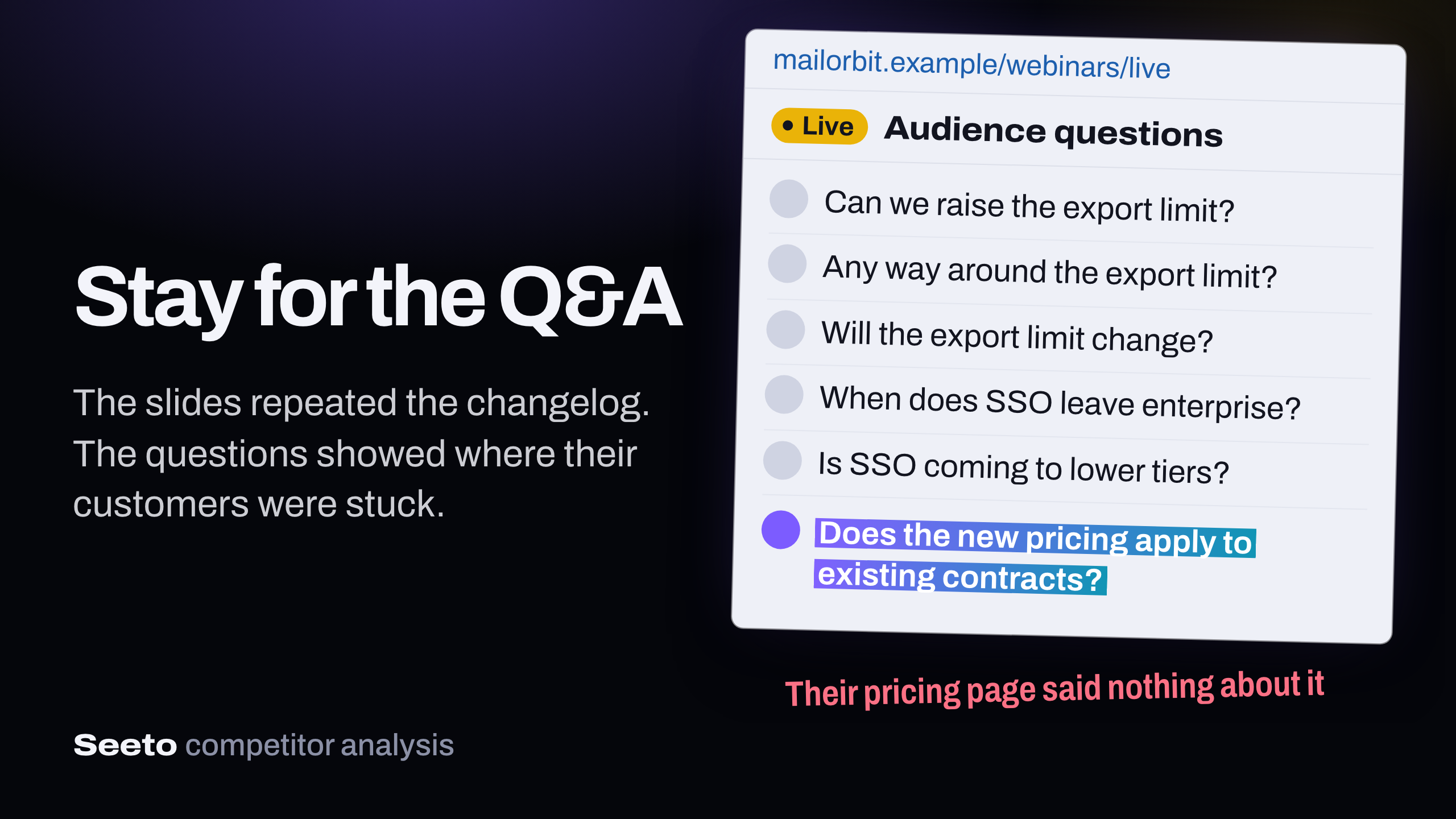
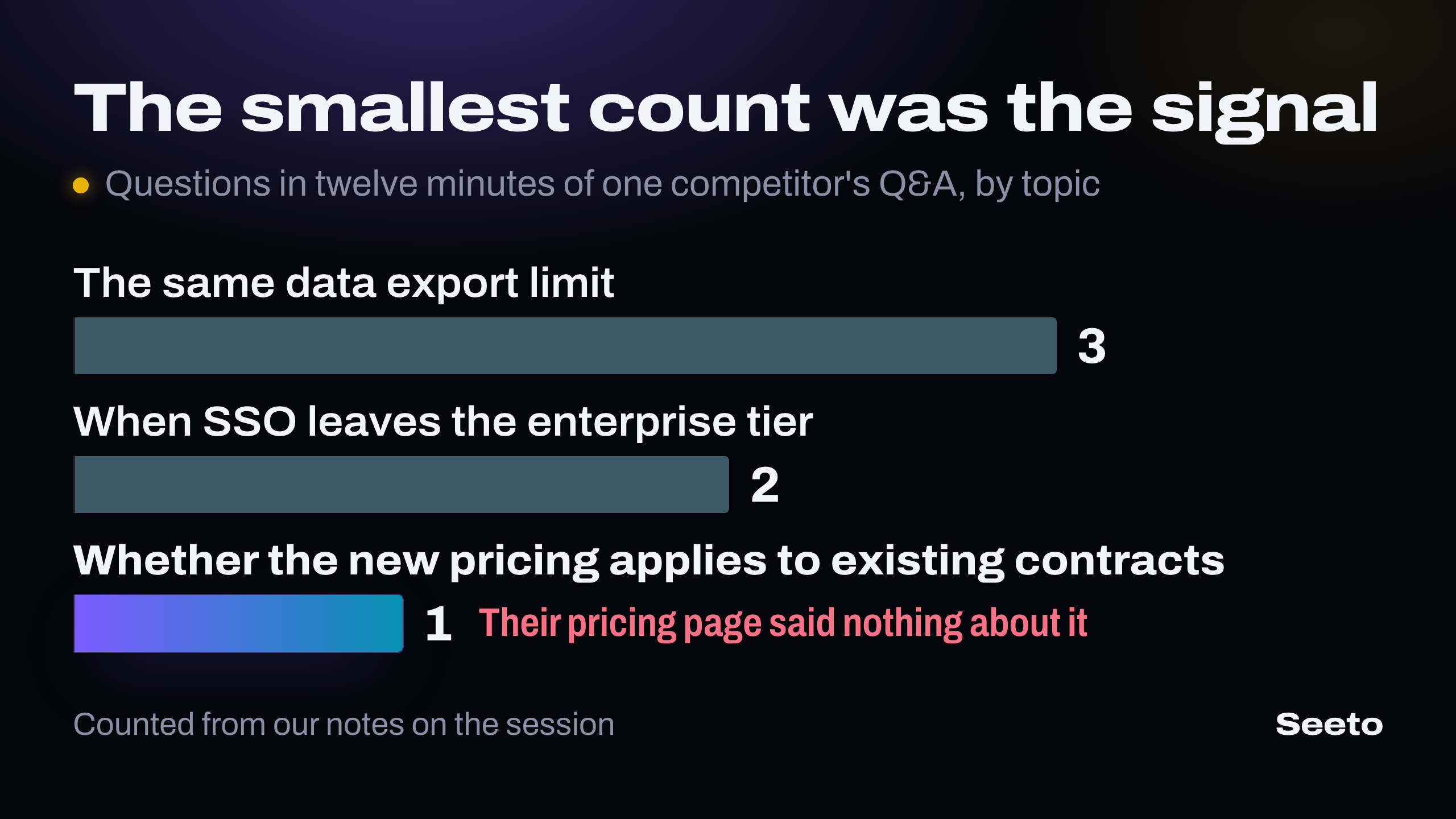
In twelve minutes of Q&A, we heard three questions about the same data export limit. Two people asked when SSO would leave the enterprise tier. One person asked, politely, whether the new pricing applied to existing contracts.
That last one was the moment. Their pricing page said nothing about existing contracts. Their customers clearly did not know either.
None of this was secret. It was said out loud to a few hundred people. We had just never treated a webinar as a place to listen.
What else the session gave away
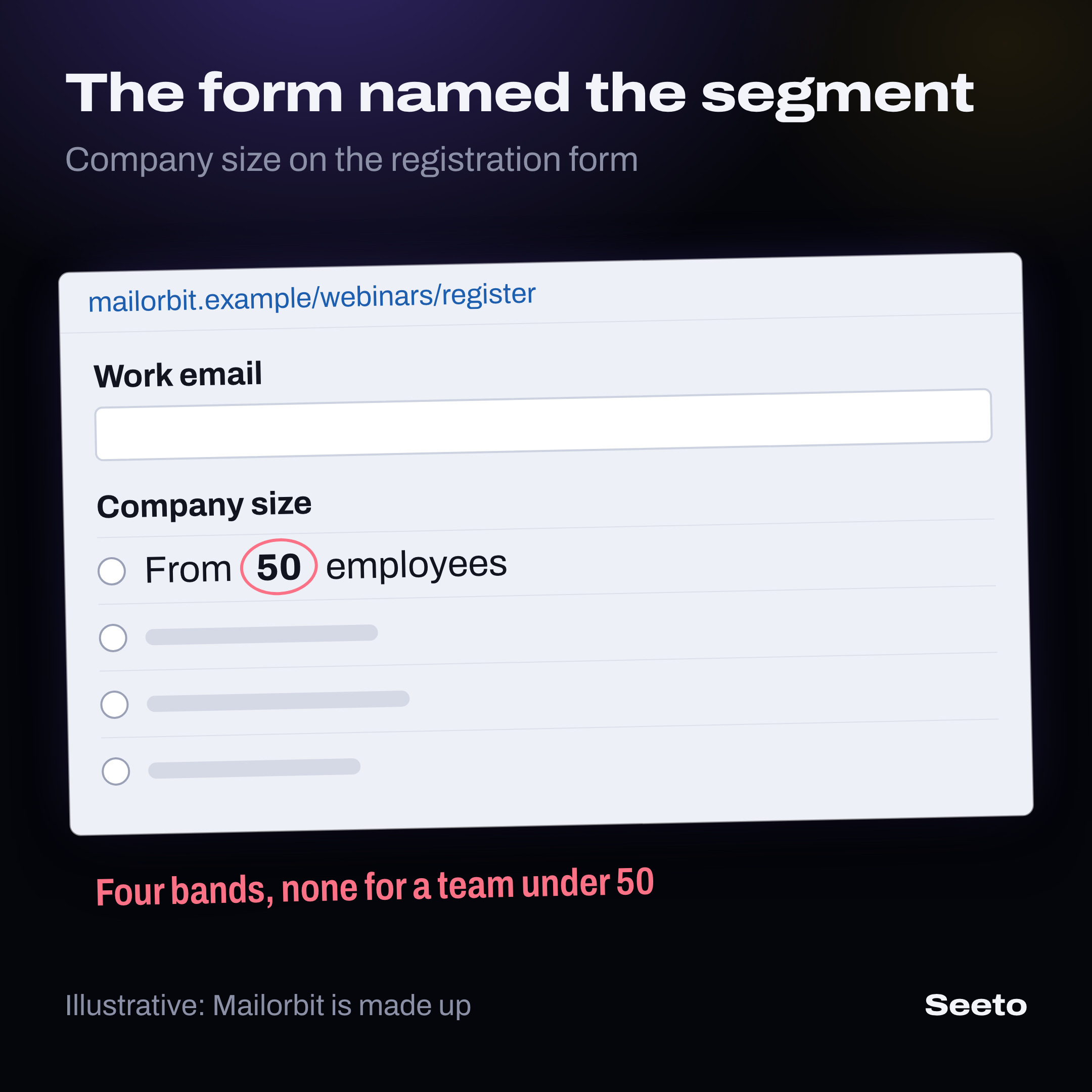
The registration form asked for company size in four bands. The smallest band started at 50 employees. That told us more about their target segment than their positioning copy did.
The presenters mattered too. A year ago, their webinars were run by a product marketer. This one had a solutions engineer and a customer success lead. That is a company shifting from acquisition to retention, and saying so with its speaker lineup.

The questions the host skipped were also data. Two were about a feature we had shipped months earlier. Neither got an answer.
How we work with webinars now
We do not attend every session. That would eat a week each quarter. Instead, Seeto watches each competitor's events page and reports a new webinar as a separate change event. It does not transcribe the session or summarize it. A person still has to sit in the room.
When a topic looks relevant, one of us joins live and writes down the questions verbatim. Not the answers. The questions. Those notes go next to what we already collect from their community forums and their email program.
The demo shows you the product a competitor wants to sell. The Q&A shows you the product their customers actually have.