Cloudflare announces in weeks. The changelog ships.
If you compete with Cloudflare, you probably read its blog during Birthday Week. You probably also over-react to it.
That is not a criticism of the blog. It is very good at what it is for. Cloudflare runs themed launch weeks several times a year: Birthday Week, Developer Week, Security Week, and others. Each week produces a dense run of posts, many of them announcing products. A competitor who reads only those posts comes away with a picture of a company that ships everything, everywhere, at once.
The picture is incomplete. Cloudflare publishes a second, much quieter surface: the changelog on its developer documentation site. Read the two side by side and you get a different, more useful story.
The launch week is a statement of intent
A launch-week post is marketing in the honest sense. It tells developers and buyers where Cloudflare wants to be taken seriously next. The theme of the week is itself a signal. A week built around AI, or security, or the developer platform says which audience the company is courting this quarter.
Look at the labels inside the posts, not just the headlines. Cloudflare is consistent about release stages: private beta, open beta, generally available. A product announced in "private beta" with a waitlist is a claim about direction. A product announced as "generally available" with a pricing table is a claim about revenue.
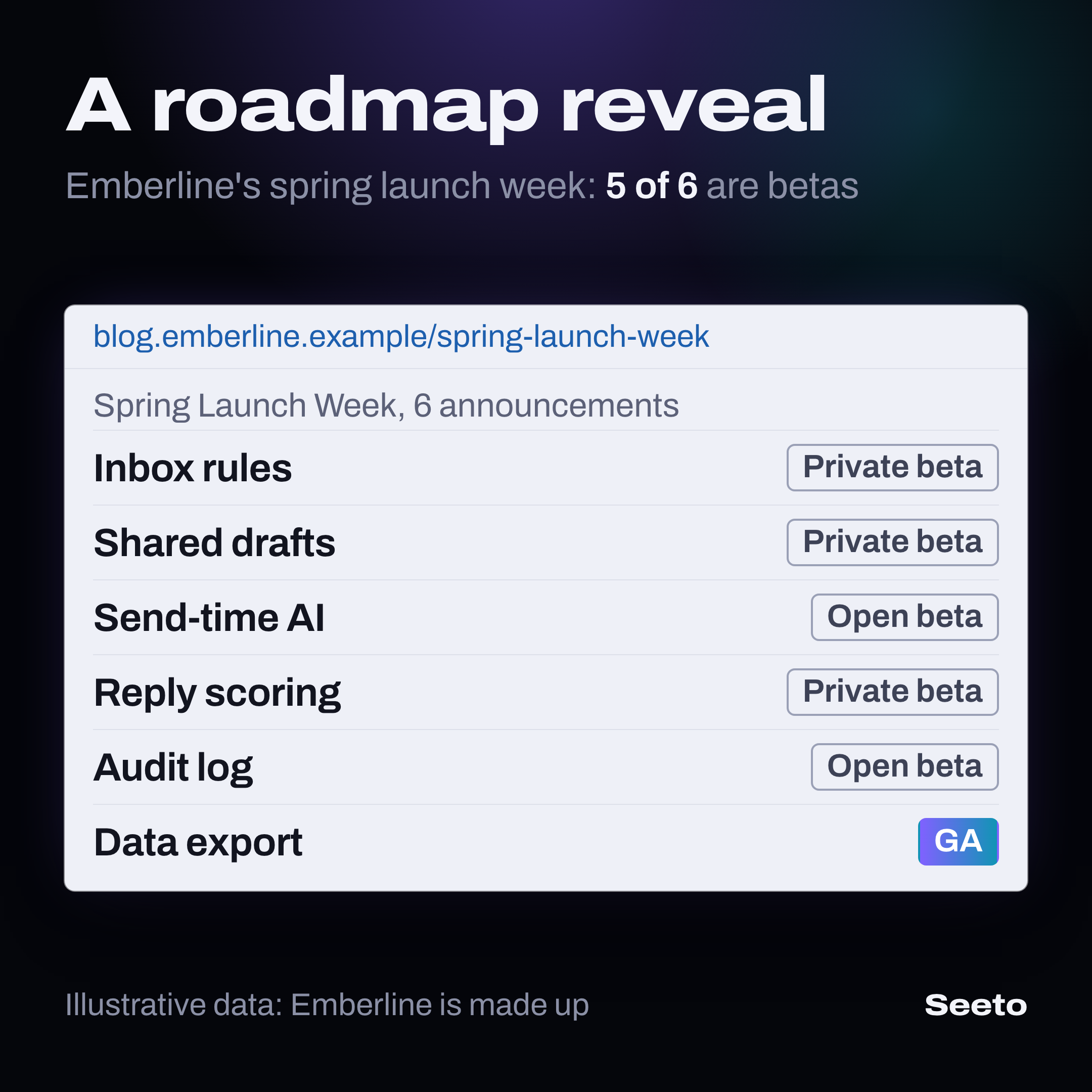
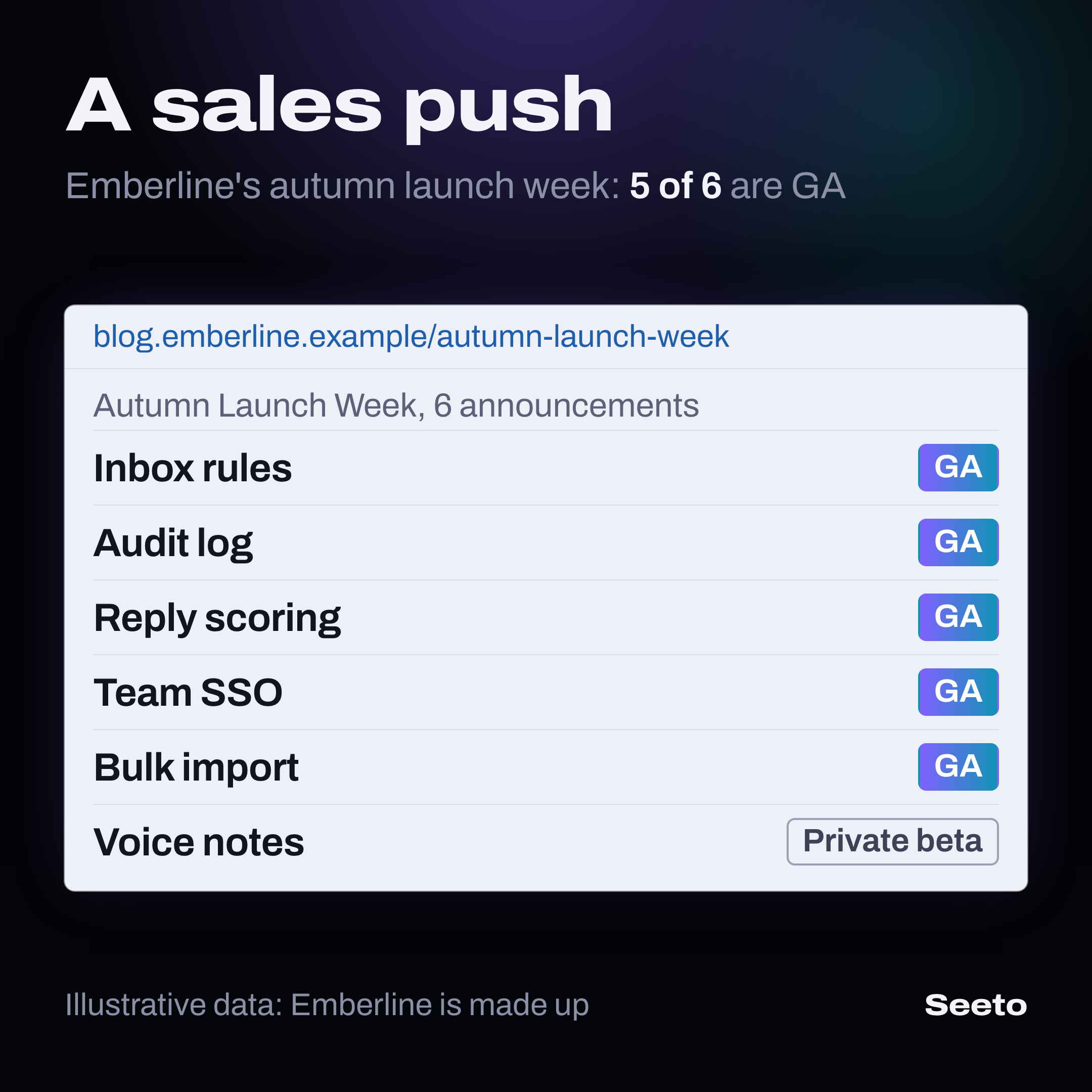
For a competitor, the ratio matters more than any single launch. A week where most announcements are betas is a roadmap reveal. A week where most announcements are GA is a sales push. Those call for very different responses from your team.
The changelog is a statement of fact
The developer changelog does not care about themes. It lists, product by product, what changed and when: a new API field, a limit raised, a beta opened to everyone, a feature marked GA.
This is where launch-week promises either land or drift. Pick three beta announcements from the last launch week and search the changelog for each product. You will usually find one of three patterns:
- Steady entries. Small, frequent changes to the product. A team is working on it, and customers are using it enough to need fixes.
- A single GA entry, months later. The product graduated. Expect it to show up in sales conversations soon.
- Silence. No entries since the announcement. Silence is not proof of abandonment, but it is the strongest early hint you will get from the outside.
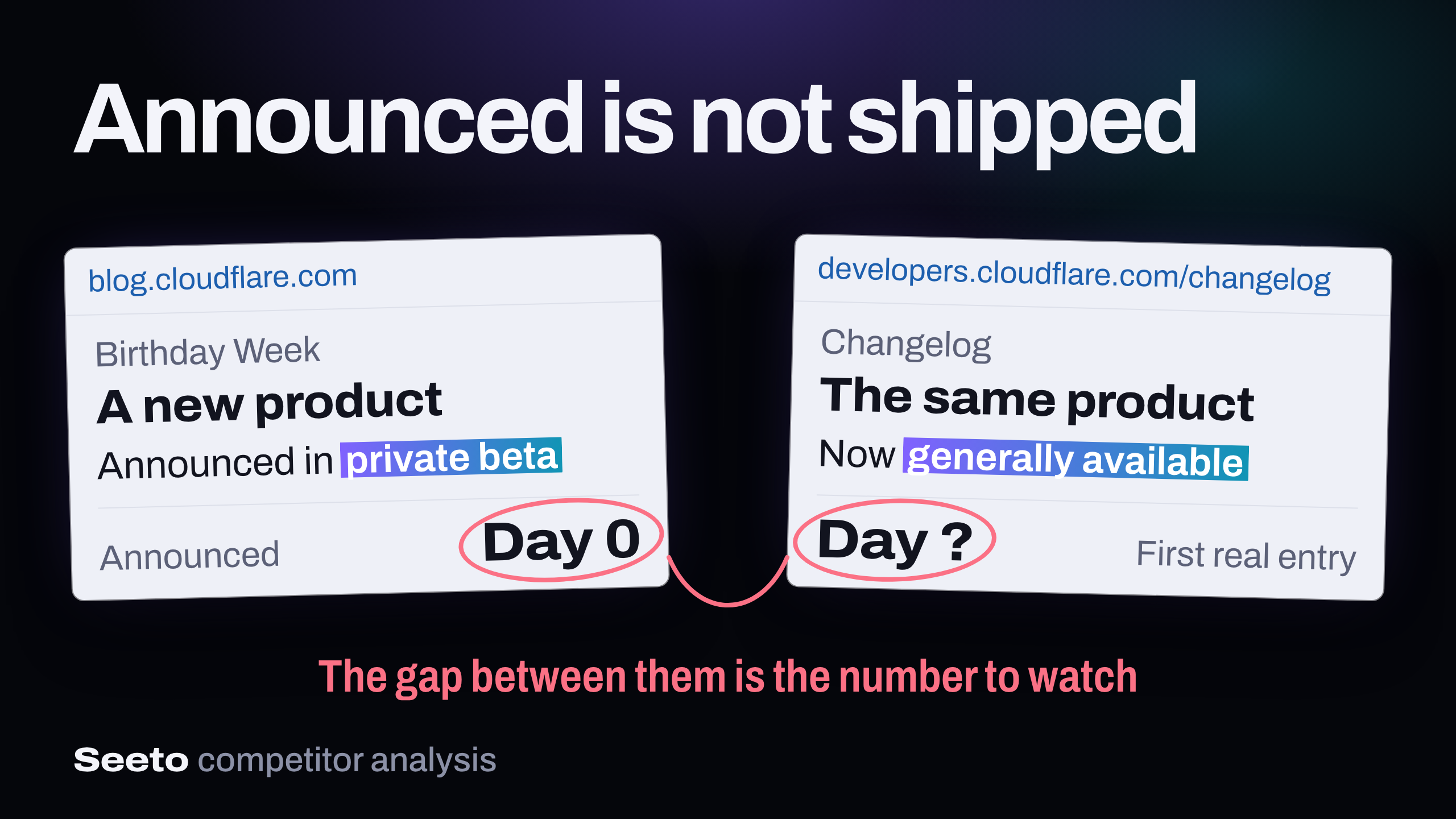
The gap between "announced" and "first real changelog entry" is the number to watch. It tells you which launches had a team behind them on day one and which were placeholders. We made the same argument about Supabase's launch weeks: the batch is the announcement, the follow-through is the signal.
Pricing pages confirm what the changelog suggests
The third surface is the pricing page, and on Cloudflare it moves less often than the other two. That is exactly why it is useful.
Cloudflare's developer platform has a paid Workers plan with a low monthly minimum and usage-based charges on top. When a beta product gets its own line in that pricing, with included usage and an overage rate, it has crossed from experiment to business. A changelog GA entry without a pricing line is a soft launch. A pricing line is commitment.
Pricing changes on infrastructure products are also small and easy to miss: a raised free-tier limit, a new included quota, a per-request rate cut. Nobody writes a launch post about a quota change. You need a before-and-after copy of the page to see it, the same discipline we described in Wayback pricing archaeology.
What this means for your team
If you sell against Cloudflare, read the three surfaces in a fixed order. The launch week tells you what to prepare for. The changelog tells you which preparations to finish. The pricing page tells you when the conversation reaches your deals.
The hard part is not reading any one of them. It is noticing the quiet change on the second or third surface weeks after the loud one has scrolled out of view. This is the job Seeto does: it monitors public pages like changelogs and pricing pages continuously and surfaces each diff as a discrete change event, so the GA entry or the new pricing line reaches you on the day it appears. It does not decide what the change means. That judgment stays with your team, and it is easier to make when you are not reconstructing the timeline from memory. A diff can still mislead you, so read each change in context.
The loud surface tells you what a competitor hopes. The quiet one tells you what it did.